Most AI systems use one model to do everything. That's why they make mistakes.
The Problem with Single-Model AI
When you give an AI employee a task, you're asking it to simultaneously understand what needs to be done, execute the work correctly, validate the results meet quality standards, and find relevant information from massive datasets.
One AI trying to do all of this at once is like asking someone to drive the car, read the map, check if they're going the right direction, and remember everything they've ever learned — all at the same time. It doesn't work.
How Cerebral Solves This
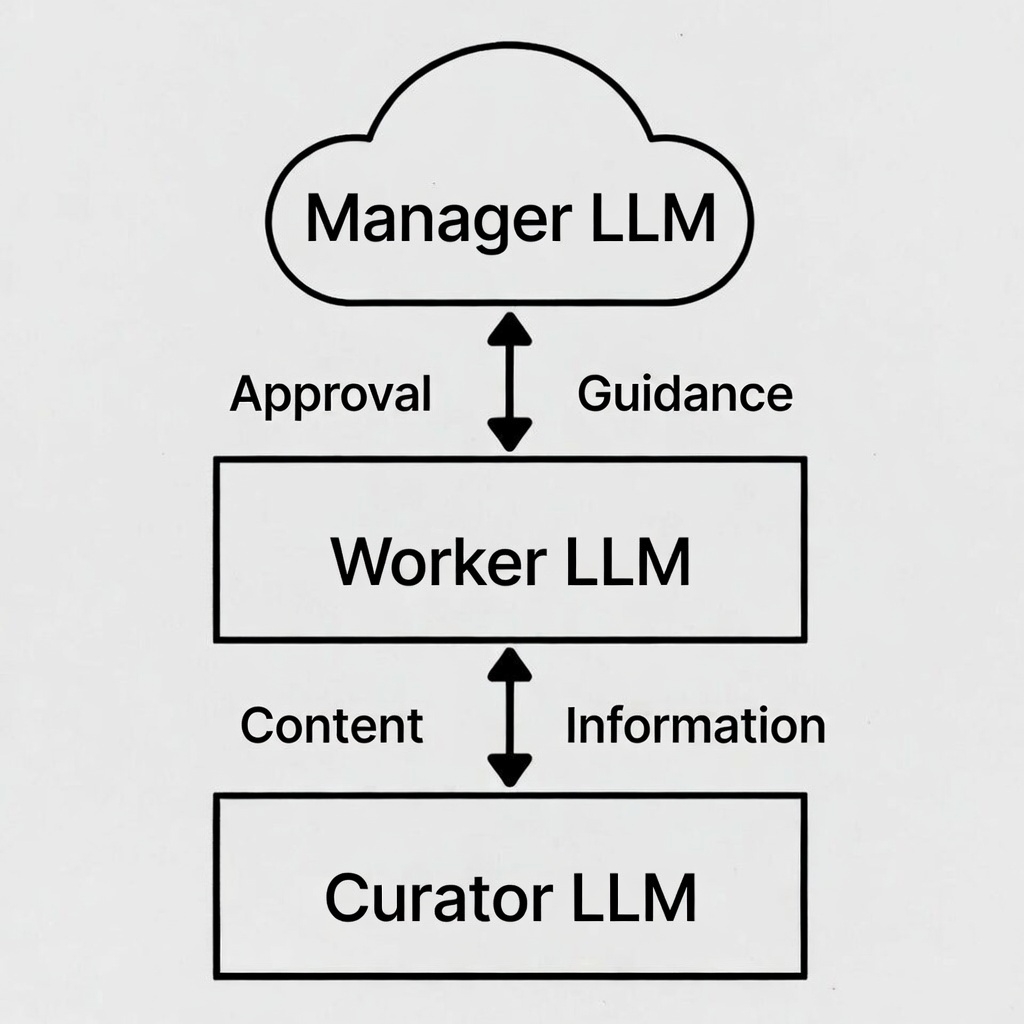
We use three specialized AI layers, each with a specific job. Not because we want to be fancy. Because it's the only way to get production-grade quality.
Layer 1: The Content Curator — finds exactly what's relevant from thousands of pages of information. When a customer asks about a policy buried in a 200-page employee handbook, the Curator scans the whole document and surfaces only the relevant 2 paragraphs. Without this layer, you're either sending random chunks that might miss the answer, overwhelming the AI with irrelevant information, or paying 10x more because you're sending entire documents every time.
Layer 2: The Worker — actually does the work. Gets a goal ("process this refund if the order qualifies under our return policy"), checks the order date, reviews the policy, determines eligibility, executes if approved, documents what happened. The Worker's job is execution, not judgment. Without this layer, you'd have one AI trying to both execute AND validate its own work — which doesn't work. People who check their own work miss mistakes. AI is no different.
Layer 3: The Manager — validates that the work was done correctly. Reviews what the Worker accomplished with a fresh perspective: "Did you actually gather the data you said you gathered? Are these real values or placeholders? Does this comply with our business rules?" If the Manager approves, work proceeds. If rejected, Worker retries with specific feedback. Without this layer, the Worker's output goes directly to the customer without review. Mistakes ship to production.
Why This Matters
Better quality — the Manager catches what a single model misses. Real example: Worker processes a refund, Manager catches that the Worker used a placeholder order number instead of the actual number. Rejects. Worker retries with correct data. A single-model system would have shipped the placeholder.
Lower costs — the Curator uses cheap models to filter, Worker only processes relevant information, Manager uses smart models only for validation. Processing a 100-page policy document: without Curator is ~25,000 tokens ($0.05), with Curator is ~1,200 tokens ($0.002). 25x cost reduction while improving accuracy.
Adaptability — Worker dynamically chooses tools, Manager validates regardless of how work was done. Add a new shipping provider: single-model requires retraining, three-layer means Worker sees the new provider in available tools and Manager validates the result. No changes needed.
Auditability — clear separation: Curator found it, Worker did it, Manager approved it. When regulators ask "why did your AI approve this refund?" you can show exactly what information was surfaced, what the Worker determined, and why the Manager approved.
Why Most AI Companies Don't Do This
Because it's harder to build. Single-model systems are simple: one prompt, one model, one response. Three-layer systems require orchestration between layers, retry logic when Manager rejects, dynamic tool selection for Worker, and efficient token management.
Most AI companies optimize for demos. Demos work with single-model systems. Production doesn't.
Single-model AI is fine for chat. Three-layer AI is required for labor. That's the difference between a tool and an employee.